
Where Does "a Month's Salary on the Ring" Come From?

In this guide
"Spend a month's salary on the engagement ring" is not an old tradition. It comes from advertising: a campaign for the diamond company De Beers that started in the 1930s, run by an American agency, which suggested a month's pay and later raised the figure to two months in the US and three in Japan.
As BBC News put it in 2014: "Is it a real tradition that stretches back centuries? The short answer is no." This is the long version of our "Wedding myths" video about it, with the numbers and where they come from.
Before the adverts, diamonds were not the norm
Diamond engagement rings existed long before the 20th century, but they were a luxury, not the expectation. The BBC puts it plainly: "Even on the eve of World War Two, a mere 10% of engagement rings contained diamonds. By the end of the 20th Century, 80% did." Those figures come from the American market.
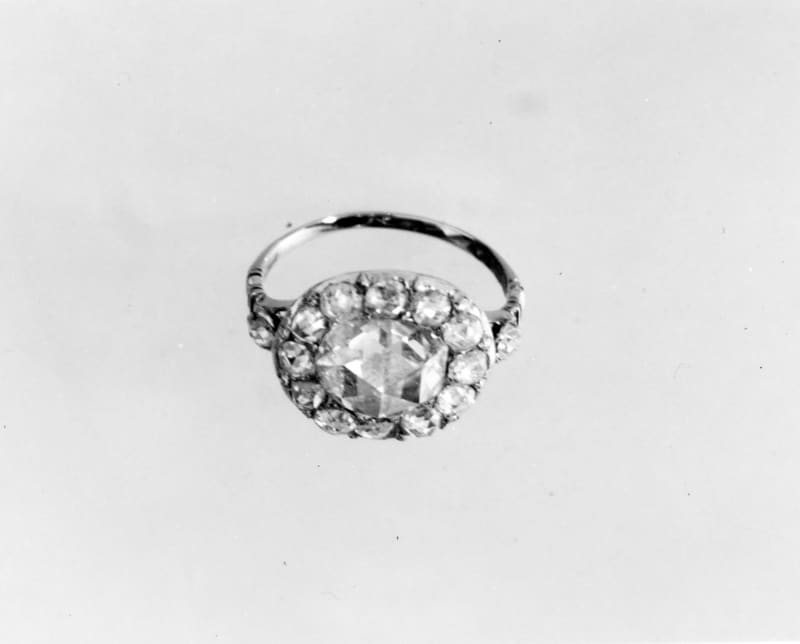
A ring with a cluster of diamonds, about 1760. Diamond rings are old; the idea that every engagement needs one is not. The Metropolitan Museum of Art, CC0.

The 1930s: slumping sales and an ad agency
By the late 1930s diamond sales were suffering in the Depression. De Beers hired the American advertising agency N.W. Ayer in 1938, and the adverts started the year after. The BBC describes the result as "an advertising drive from the De Beers diamond cartel that started in the lean years of the 1930s".
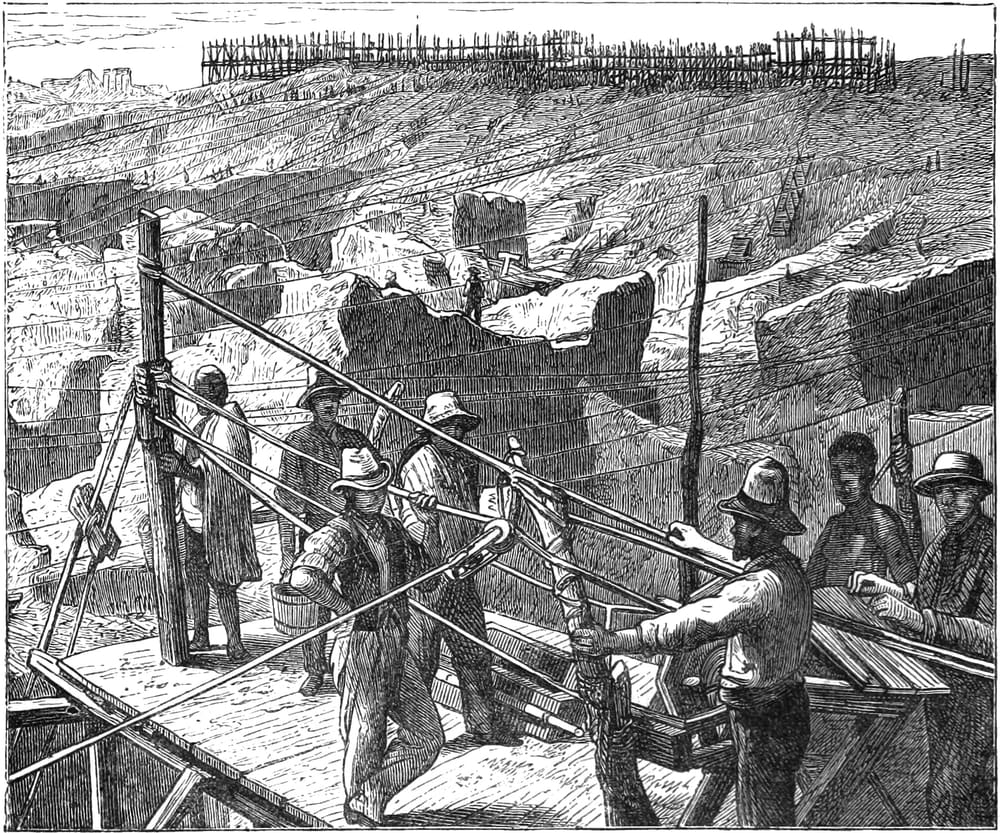
"Kimberley Kopje in 1872", the South African diamond fields, engraving from Emil Holub's Seven Years in South Africa (1881). Via Wikimedia Commons, public domain.

The adverts named the price
The salary rule came from the campaign itself. According to the BBC: "In the 1930s, at the start of the De Beers campaign, a single month's salary was the suggested ring spend. In the 1980s in the US, it became two months."
Other countries got their own figure. The BBC, citing Rebecca Ross Russell's Gender and Jewellery: A Feminist Analysis, says British adverts kept to one month, "But Japanese men were urged to spend three months' salary." So if you grew up in Britain hearing "one month", that is the British version of the advert. If you heard "two", you were probably listening to America.
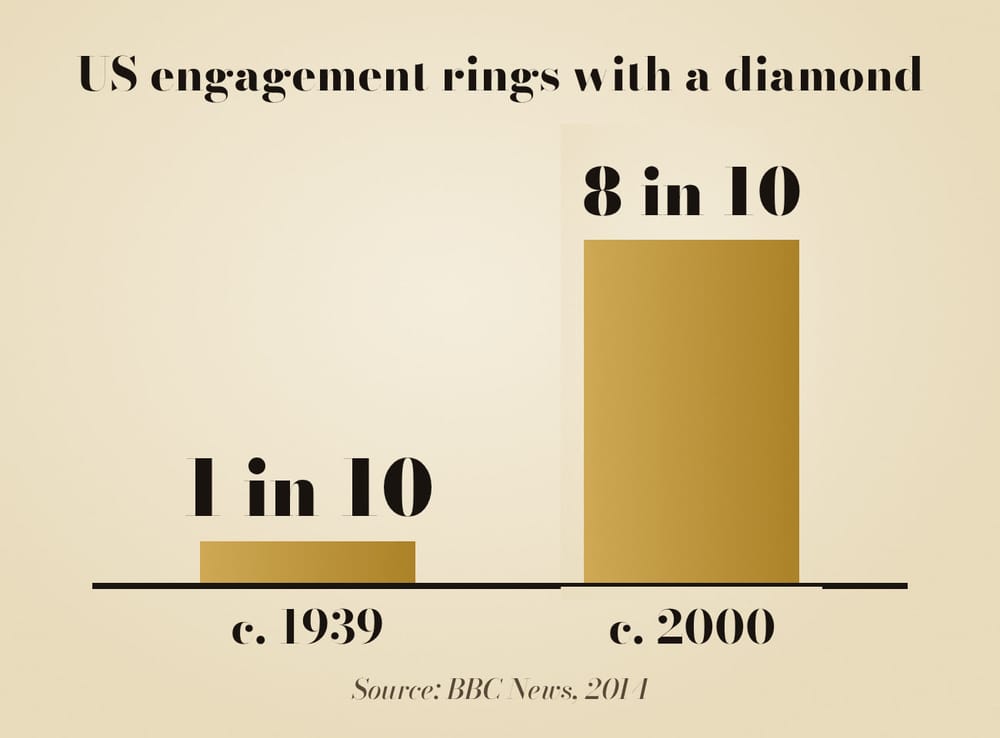
US engagement rings with a diamond, from 1 in 10 on the eve of the Second World War to 8 in 10 by the end of the century. Figures from BBC News (2014); chart made by us.
1947: "A diamond is forever"
The line that sealed it came in 1947. It was written by Frances Gerety, a copywriter at N.W. Ayer, and Advertising Age later named it the slogan of the 20th century. Ian Fleming is said to have taken the title Diamonds Are Forever from it, after seeing it in American Vogue.
As Dr T. C. Melewar of Middlesex University told the BBC, De Beers "invented a tradition which captured some latent desire to mark this celebration of love." People have been repeating it ever since.
What we're not claiming
- That De Beers invented the diamond engagement ring. Diamond rings, and diamond engagement rings, are centuries older. Archduke Maximilian's ring for Mary of Burgundy in 1477 is the usual early example. What the campaign created was the rule and the near universal expectation.
- That "1 in 10" is a British figure. It is American, and so is the 8 in 10.
- That the UK figure is beyond doubt. "One month" in Britain rests on one book, as cited by the BBC.
- The Fleming story as certain. It comes from a single biography.
- That you should spend any particular amount. The only rule that holds up is the one you set yourselves.
A note from us
We built Quiz Your Guests for our own wedding, and facts like these make good questions between the rounds about the couple. You can write your own multiple choice questions, one right answer and three wrong ones; guests scan a QR code, answer on their phones in two teams, and the scoring happens by itself. There is a printable wedding quiz too, if paper suits your day better.
More wedding myths
- Who started the white wedding dress?
- Where does the word honeymoon come from?
- Where does "Here Comes the Bride" come from?
- Why does the groom carry the bride over the threshold?
- Why did eloping couples race to Gretna Green?
Sources
- Laurence Cawley, De Beers myth: Do people spend a month's salary on a diamond engagement ring?, BBC News, 16 May 2014
- NPR Here & Now, The Ad-Woman Who Made Diamonds 'Forever', July 2013, and the interview transcript
- Wikipedia, Engagement ring (citing J. Courtney Sullivan in the New York Times, 2013, and Otnes and Pleck, Cinderella Dreams, 2003) and Diamonds Are Forever (novel) (citing Pearson, 1967)
Skip the spreadsheet
Everything in this guide — timed rounds, team scoring, escalating points — is built into Quiz Your Guests. Answer four questions and your quiz arrives already written and scheduled around your day.
Ready to run yours?
Your quiz arrives written, themed and timed around your day — free to try, no signup needed.
Create your wedding quiz →Keep reading