
Why Were June Brides Said to Be Better Off Than May Ones?

In this guide
It was never the bath. June brides were said to be better off than May ones because of an old Roman belief that May was a bad month to marry, which Ovid wrote down about two thousand years ago. The story that everyone had their yearly bath in May, and so still smelled fresh in June, is made up. It first turns up in a chain email in 1999.
This is the long version of our "Wedding myths" video, with the email, the Romans and a queen's palace gate.
"Life in the 1500's"
In 1999 an email of "facts" about the past went round. It began:
Life in the 1500's: Most people got married in June because they took their yearly bath in May and were still smelling pretty good by June.
On 10 June 1999 someone posted it to ADS-L, a language mailing list, having received it "three times in the past week". The reply the next day: "This was substantially debunked a few weeks ago by Take Our Word for It".
Snopes later called the whole thing "an extended joke" whose facts "were simply made up". That includes the next line, about brides carrying bouquets to hide the smell. Nobody knows who wrote it. Marc Carlson, who tracked the text at the University of Tulsa, called April 1999 "the earliest appearance I know of" and added: "Original source is as yet unknown".
The same email explains "threshold" with a "thresh hold" in the doorway, which is made up as well. Here is where carrying the bride over the threshold really comes from.
Ovid and the restless dead
The real story is Roman. Ovid's Fasti is a poem about the Roman calendar, and in May it reaches the Lemuria, the festival of the restless dead, on 9, 11 and 13 May. In our own translation (Fasti 5.485-490):
But in those days the people of old shut the temples, as you still see them shut at the season of the dead. It was no time for a widow to marry, nor a maiden: a woman who married then did not live long. For this reason too, if proverbs move you, folk say it is bad to marry in May.
Note the "too": the dead are one reason, and a few days end up covering the whole month.
That last line survives in two versions. Some manuscripts have mense malum Maio, "it is bad to marry in May". Others have mense malas Maio: "folk say bad women marry in May".
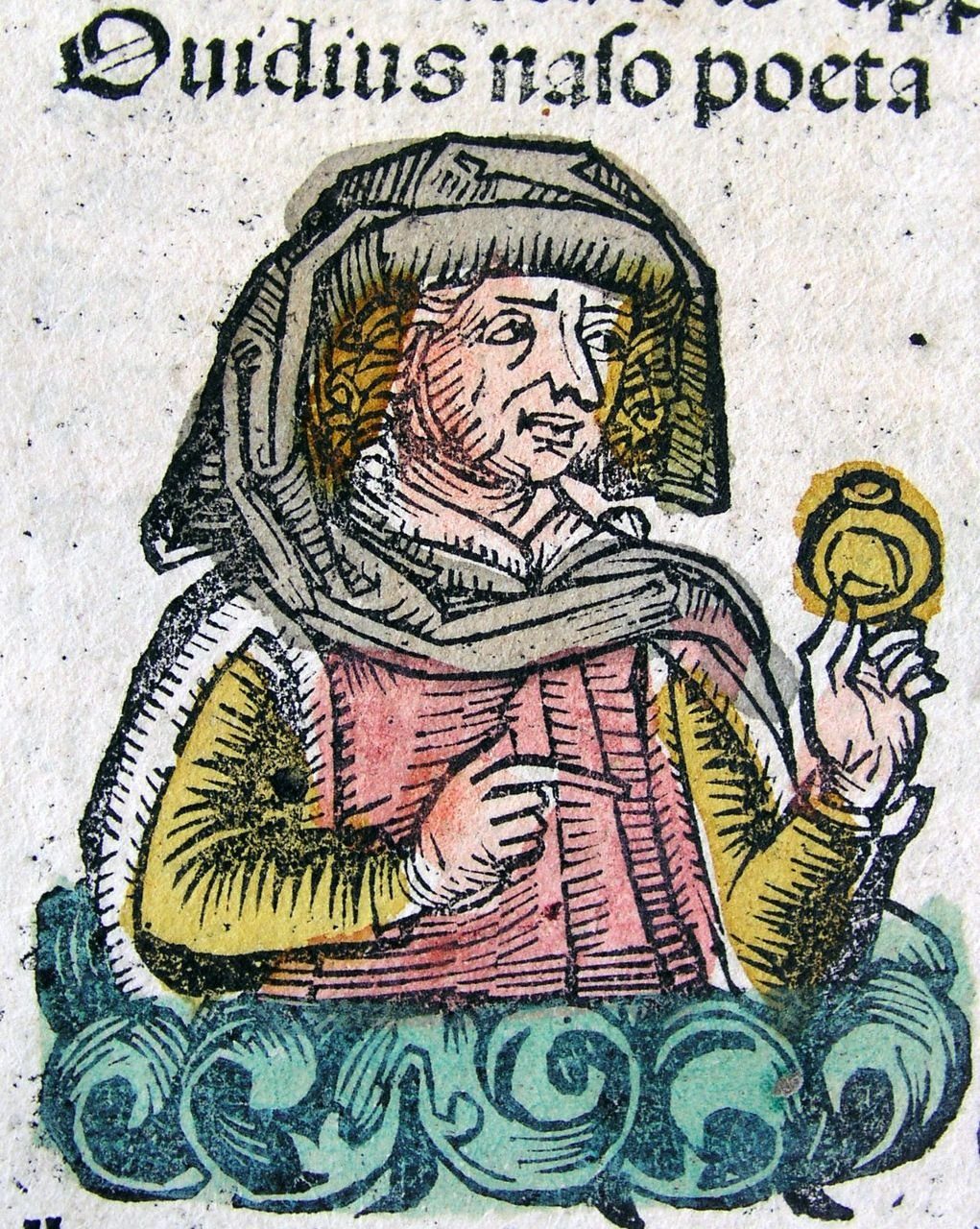
Ouidius naso poeta, Ovid as the Nuremberg Chronicle pictured him, hand-coloured woodcut, workshop of Michael Wolgemut and Wilhelm Pleydenwurff, 1493. The Chronicle reused its blocks for different people, so this is not a likeness. Photo Beloit College, via Wikimedia Commons, public domain.

Plutarch asks our question
About a century later, around AD 100, Plutarch asked it outright. In Philemon Holland's English of 1603: "Why did not the Romans marie in the moneth of May?"
He takes it as fact that they didn't and only wonders why, with four guesses: May sits between Venus's April and Juno's June, both goddesses of marriage, so couples went a little earlier or waited; May was the month of a great purification; Latins made offerings to the dead in May; and May was for the elders, June for the young.
The line usually quoted as his answer, "The Romans therefore maried not in May, but staied for June", is the end of that fourth guess. He never chooses between the four.
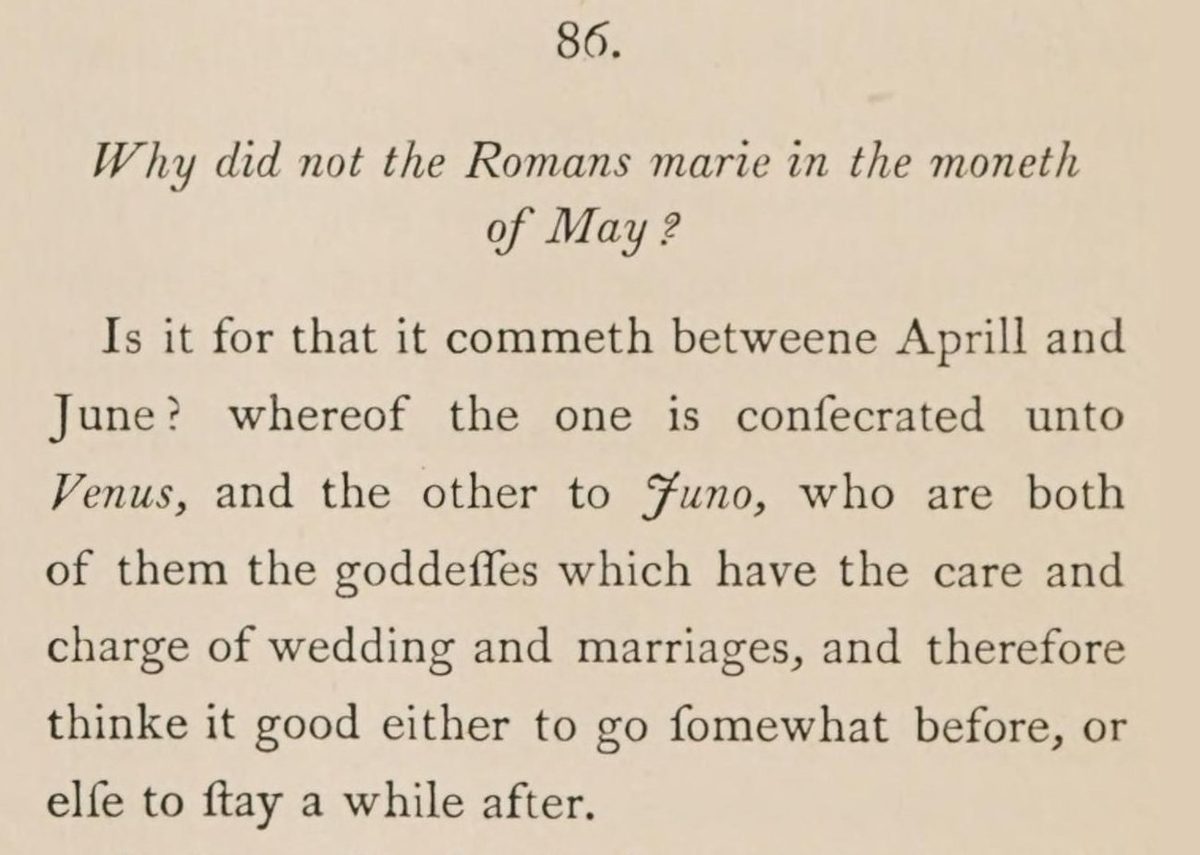
The Romane Questions 86, Plutarch in Philemon Holland's translation of 1603, from F. B. Jevons's edition (David Nutt, 1892), page 130. Wellcome Collection copy via the Internet Archive, Public Domain Mark.
Even June wasn't safe
Later in the Fasti (6.219-234), a priestess, the wife of Jupiter's priest, warns Ovid that the first half of June is no good for weddings either, not until Vesta's temple has been swept out, around 15 June. Better than May, then, but not lucky.
What about Juno?
June is probably named after Juno, as modern dictionaries say, and she is in Plutarch's first guess. But she is one guess of four, and doesn't explain what was wrong with May: a "sort of". She is question 31 in our wedding quiz questions for guests.
Holyrood, May 1567
On 15 May 1567, Mary, Queen of Scots, married the Earl of Bothwell at Holyrood in Edinburgh. It was her third marriage, three months after her second husband, Lord Darnley, was murdered on 10 February. (Dates are Old Style, as in every source.)
A Scottish chronicle, The Historie and Life of King James the Sext, records: "The same day was a pamphlet affixt upoun the palice port. Mense malas Maio nubere vulgus ait."
That is Ovid's line in the malas version: folk say bad women marry in May. The chronicle never names Ovid, so that identification is ours. A Roman proverb about the calendar had become a jibe at the bride.
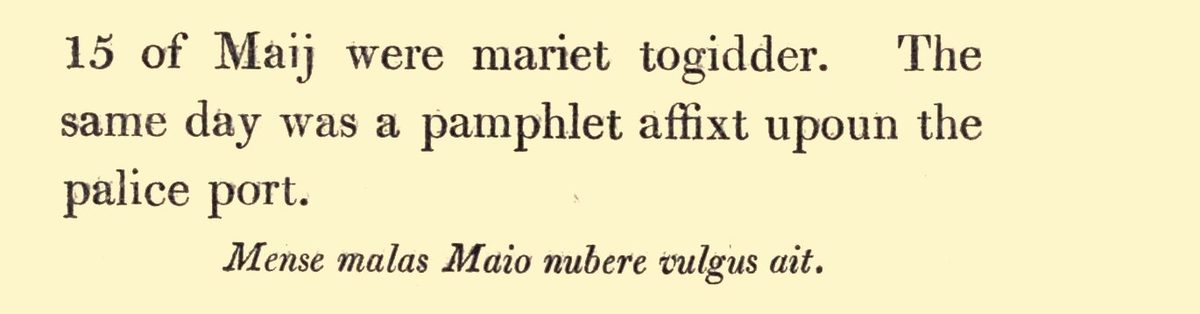
The Historie and Life of King James the Sext, Edinburgh, 1804, page 15. University of California Libraries copy via the Internet Archive, not in copyright.
The chronicle was written later that century, around 1582 to 1597, and is sometimes attributed to John Colville, though its 1825 editor thought the author unknown. This part survives in a copy from 1617 or later. The historian Tytler, quoted in Notes and Queries in 1849, has the paper fixed to the gate "on the following morning" instead.
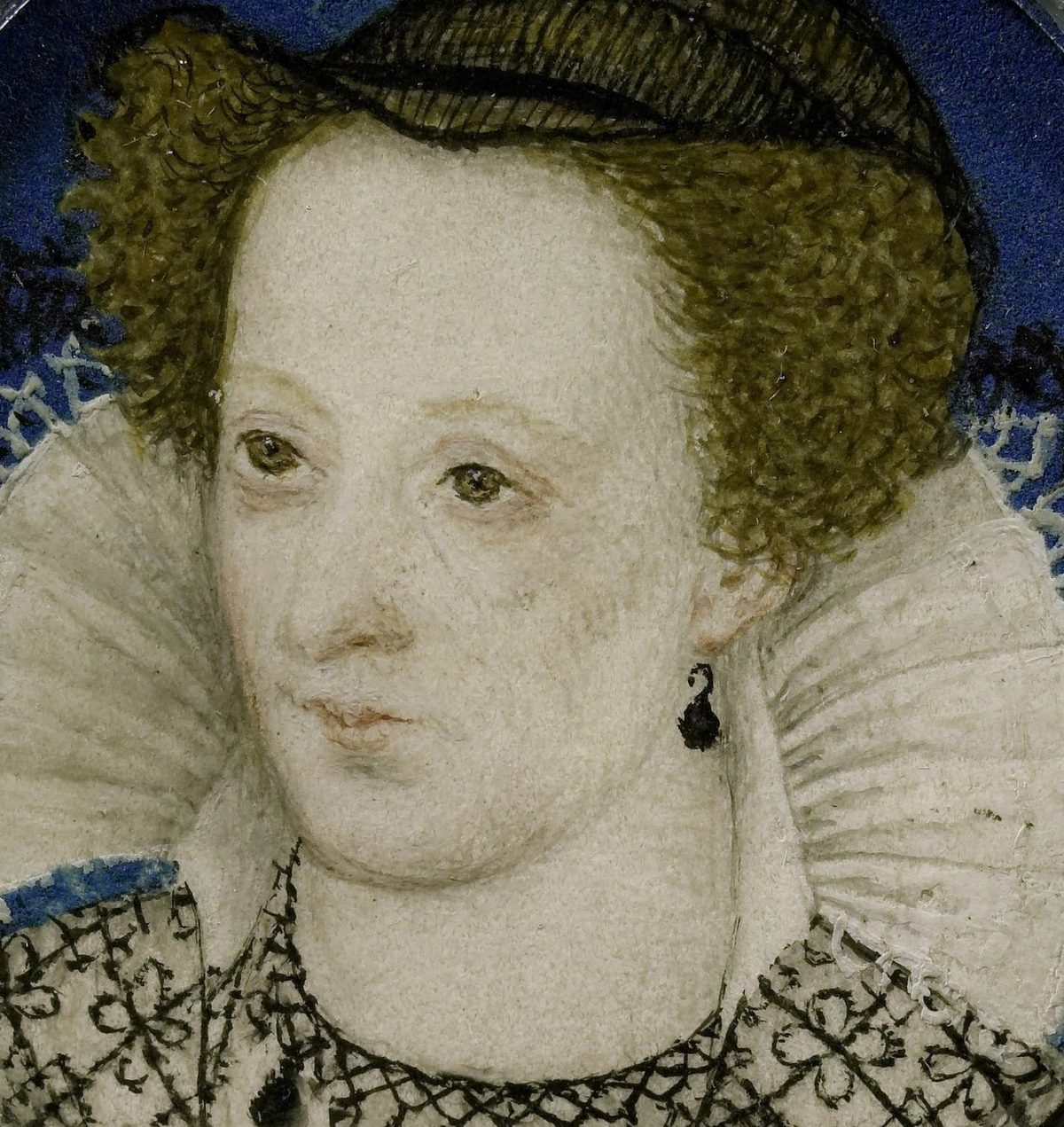
Mary, Queen of Scots, miniature by an unknown artist, 17th century, painted after her death (colours white-balanced by us). Rijksmuseum, Amsterdam, via Wikimedia Commons, Public Domain Mark.

In 1863 Chambers's Book of Days could still write that it was "an idea as ancient as early Roman times, stated by Ovid in his Fasti, and still prevalent in Europe, that May is an unlucky month in which to be married."
The bath story is from 1999. The real one was pinned to a queen's gate in 1567.
What we're not claiming
- That anyone in Britain actually avoided May. Chambers reports a belief, not when people married.
- That the Romans thought June was lucky. Only that May was worse; early June was off too.
- That June is Britain's most popular wedding month. It isn't, and this story doesn't explain today's wedding season.
- That nobody in the 1500s bathed in May. We have no bathing records and don't need them. The email's story is made up either way.
- Who pinned up the Latin, or exactly when. The chronicle says the same day, Tytler the next morning.
A note from us
We built Quiz Your Guests for our own wedding, and facts like these make good questions between the rounds about the couple. You can write your own multiple choice questions, one right answer and three wrong ones; guests scan a QR code, answer on their phones in two teams, and the scoring happens by itself. There is a printable wedding quiz too, if paper suits your day better.
More wedding myths
- Who started the white wedding dress?
- Where does the word honeymoon come from?
- Where does "Here Comes the Bride" come from?
- Why does the groom carry the bride over the threshold?
- Why did eloping couples race to Gretna Green?
- Where does "a month's salary on the ring" come from?
- Who came up with women proposing in a leap year?
- Where does the seven-year itch come from?
- Why did so many couples marry in March?
- Why was the 1923 royal wedding not on the radio?
- Where does "Can't Help Falling in Love" come from?
Sources
- Ovid, Fasti 5.485-490, Latin from The Latin Library; Fasti 6.219-234 and the malum reading in J. G. Frazer's Loeb edition (1931), Internet Archive. Translations of Ovid here are our own.
- Plutarch, The Romane Questions 86, trans. Philemon Holland (1603), ed. F. B. Jevons (1892), pp. 130-131, Project Gutenberg and Internet Archive; trans. Frank Cole Babbitt (Loeb, 1936), LacusCurtius
- The Historie and Life of King James the Sext, Edinburgh 1804, p. 15, Internet Archive; Bannatyne Club edition 1825, Internet Archive
- Notes and Queries, 15 December 1849 (quoting Tytler), Project Gutenberg
- Robert Chambers (ed.), The Book of Days, vol. 1 (1863), p. 569, Internet Archive
- ADS-L archive, 10 June 1999 and 11 June 1999
- Barbara Mikkelson, "Life in the 1500s", Snopes, 16 December 2000
- Marc Carlson, "Life in the 1500s", University of Tulsa (Wayback Machine copy of 17 February 2004)
- Further reading: "Life in the 1500s", phrases.org.uk
Skip the spreadsheet
Everything in this guide — timed rounds, team scoring, escalating points — is built into Quiz Your Guests. Answer four questions and your quiz arrives already written and scheduled around your day.
Ready to run yours?
Your quiz arrives written, themed and timed around your day — free to try, no signup needed.
Create your wedding quiz →Keep reading